
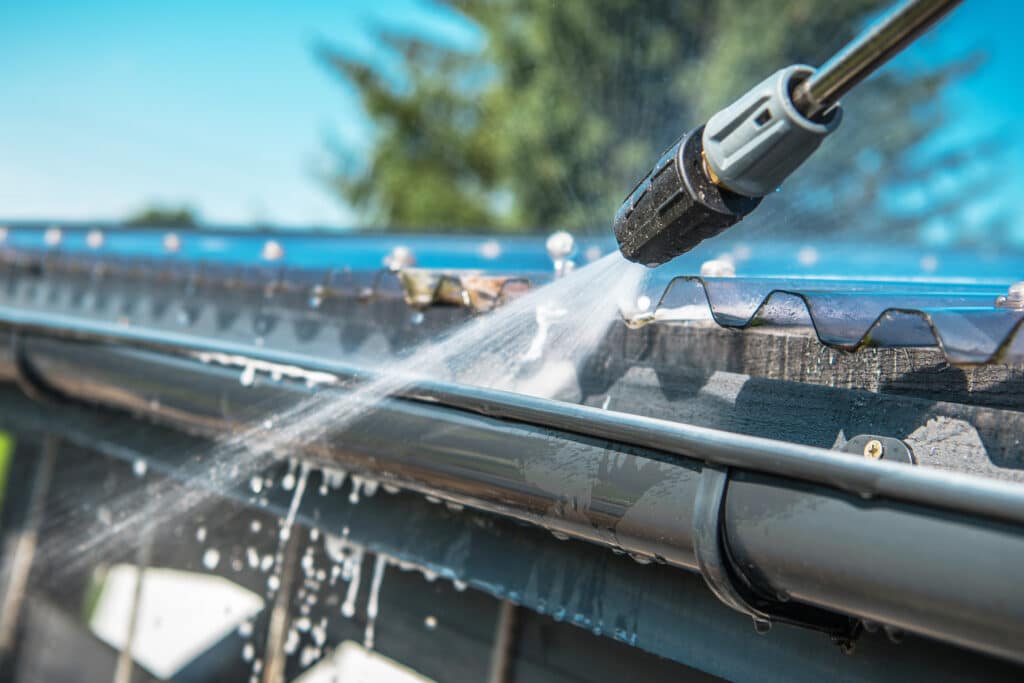
You’ve been staring up at your gutters again, haven’t you? They’re full of leaves, twigs, and gunk that built up over the last season. The idea of dragging out a ladder and scooping all that mess out by hand isn’t exactly your idea of a good weekend.
Then it hits you: “Why don’t I just blast it out with a pressure washer?” It seems quick, powerful, and way less gross than sticking your hands in wet, slimy debris.
It’s a common question we hear at D&K Power Washing: can you power wash gutters? On the surface, it sounds like the perfect solution. After all, a power washer is made for cleaning. But before you start uncoiling that hose, let’s slow down and talk about why this seemingly simple fix can be more complicated than it looks.
Can You Use a Pressure Washer on Gutters?
The short answer is yes—you can. But the more important question is, should you?
Power washing, or pressure washing, is designed to blast dirt and grime away using a concentrated stream of high-pressure water. It works wonders on driveways, patios, and siding when used correctly. But gutters aren’t the same as a concrete slab. They are more delicate, often made from aluminum or vinyl, and can be easily damaged by the same force that makes a pressure washer so effective.
So while you technically can use a pressure washer, it’s not always the smartest approach unless you know what you’re doing. At D&K Power Washing, we always encourage homeowners to weigh the risks before deciding to grab the washer. Ask us questions and check out pressure washing in Huntingdon Valley.
Why Power Washing Gutters Sounds Like a Great Idea
We get it. The idea is tempting. Instead of balancing on a ladder, pulling out handfuls of wet leaves and muck, you imagine yourself standing safely on the ground, blasting everything out in minutes. It feels modern. It feels efficient. You might even picture yourself finishing the job in an hour, then enjoying the rest of your weekend with a clean house and spotless gutters. And that’s exactly why so many homeowners think it’s the ultimate hack. But as professionals, we can tell you that the shortcut often comes with consequences that aren’t immediately obvious.
The Big Risks of Power Washing Gutters
Before you aim that spray nozzle at your roofline, it’s important to understand what’s at stake. These are the most common problems D&K Power Washing sees when people try to clean gutters themselves with a power washer.
1. Damage to Your Gutters
Most gutters are made from lightweight materials like aluminum or vinyl. While these hold up fine against rain, they’re not built for a concentrated, high-pressure water stream. A powerful blast can:
- Dent aluminum, causing the gutter to warp and lose proper drainage flow.
- Crack or break vinyl, especially older or brittle gutters.
- Blow apart seams where sections of gutter meet, creating leaks.
- Strip off paint or coatings, exposing the surface to rust and corrosion.
In other words, instead of just cleaning them, you might be setting yourself up for costly repairs—or even a full gutter replacement.
2. Collateral Damage to Your Roof, Fascia, and Siding
It’s not just your gutters at risk. Spraying high-pressure water near your roofline can force water under your shingles, which can lead to:
- Water damage to your roof decking.
- Mold and mildew in your attic.
- Rotting fascia boards where gutters attach.
- Siding damage, including chipped paint, etched vinyl, or water forced behind siding panels.
Once water sneaks behind those surfaces, it creates a perfect environment for mold and can even compromise the structural integrity of your home. This is why many homeowners look for professional gutter cleaning in Doylestown, experts know how to protect your home while thoroughly removing debris, preventing hidden water damage that DIY pressure washing often creates.
3. Safety Concerns
If you’re using a ladder while holding a powerful pressure washer, you’re setting up a dangerous situation. The force of the spray causes kickback, which can throw off your balance.
Falls from ladders are one of the leading causes of home injuries. Add the awkwardness of handling a heavy washer wand, and the risks multiply. Even if you’re careful, the possibility of losing balance and falling isn’t worth it.
4. More Mess, Not Less
One more thing people don’t think about: where all that debris goes once it’s blasted out. It doesn’t just disappear. It ends up sprayed across your siding, windows, driveway, and landscaping. Instead of one job, now you have three or four extra cleanup projects waiting for you.
If You Still Want to Try Power Washing Gutters
Even with these warnings, some homeowners still want to try it. If that’s you, here’s how to do it with less risk:
Step 1: Choose the Right Equipment
- Use an electric pressure washer with adjustable settings instead of a gas-powered one.
- Keep pressure below 1,200 PSI.
- Use a gutter-cleaning attachment, like a U-shaped wand, that directs water down into the gutter instead of sideways.
Step 2: Prep Your Area
- Move furniture, grills, or plants away from the area.
- Cover delicate plants with plastic to protect them from dirty runoff.
- Close windows and doors.
- Use a sturdy ladder with stabilizers, not a step ladder.
Step 3: Remove Bulk Debris by Hand First
This might seem like it defeats the purpose, but it prevents a huge mess. Scoop out leaves and sticks by hand before you start rinsing.
Step 4: Use Low Pressure and the Right Technique
- Always spray from the downspout end outward so debris moves toward the opening.
- Never spray up toward shingles or siding.
- Take your time and reposition the ladder instead of leaning too far.
Even with these precautions, D&K Power Washing sees plenty of DIY attempts that end with dented gutters or damaged fascia. For homeowners who want to avoid these risks entirely, professional gutter cleaning in Newtown is often a safer, more effective option than trying to power wash gutters on their own.
Better Alternatives to Power Washing
There are safer and more effective ways to clean your gutters that don’t involve risking damage or injury.
1. Hand Cleaning
This old-fashioned method may be slower, but it works. A ladder, a scoop, and a bucket are all you need to do the job carefully. After scooping out the debris, you can use a garden hose to rinse.
2. Garden Hose Flush
A regular garden hose with a spray attachment is much gentler. It won’t blast apart your gutters, and it’s still effective at rinsing out smaller debris.
3. Gutter Vacuums or Leaf Blower Attachments
These tools are designed to clean gutters from the ground using suction or air. They reduce ladder time and are a safer option for many homeowners.
4. Professional Gutter Cleaning Services
Hiring a pro like D&K Power Washing is the best way to ensure your gutters are cleaned safely and completely. Professionals have the right equipment, safety training, and expertise to clean without damaging your home.
Thinking Long-Term: Gutter Guards
If you want to make gutter cleaning easier in the future, consider having gutter guards installed. These screens or covers allow water through but block leaves and debris from entering. While they still require occasional maintenance, they greatly reduce how often you need to clean gutters.
When to Call the Professionals
If your home is two stories or higher, has a steep roof, or you just don’t feel confident working on a ladder, call in a professional.
A professional service like D&K Power Washing offers:
- Safer cleaning with proper equipment.
- An inspection of your gutter system for leaks or loose sections.
- Cleanup of all debris without leaving a mess on your property.
- Peace of mind that the job is done correctly.
Contact us for professional power washing in Bucks County, PA. Trying to do it yourself might seem like a money-saving idea, but one accident or bit of damage can cost far more than hiring a pro.
Conclusion
So, can you power wash gutters? Yes. But after looking at all the risks—damage to your home, personal injury, and the mess—it’s clear that it’s not always the best choice. Safer methods like scooping by hand, using a garden hose or a gutter vacuum, or calling a professional like D&K Power Washing will protect your gutters and keep your home looking its best.
Taking care of your home is about smart decisions, not shortcuts. For something as important as keeping water flowing away from your house, sometimes the safest and most effective choice is to leave it to the pros.