
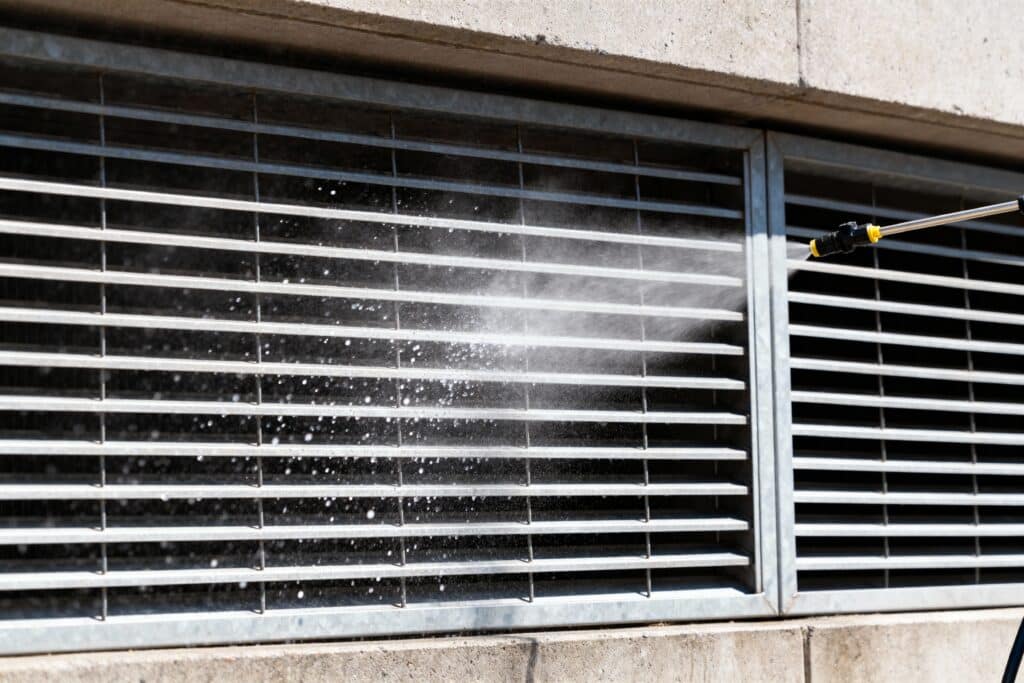
Rust is the silent enemy of curb appeal and structural integrity. Whether it is creeping across your garden furniture, staining your driveway from a leaky radiator, or eating away at your industrial equipment, rust is as unsightly as it is damaging.
At D&K Powerwashing, we get asked one question more than any other: “Can you actually power wash rust off metal?”
The short answer is yes. However, it is not always as simple as pointing a nozzle and pulling a trigger. Removing oxidation requires the right balance of pressure, heat, and chemistry. In this guide, we will dive deep into how pressure washing tackles rust and how you can restore your metal surfaces to their former glory.
The Science of Rust: Why It Is So Stubborn
Before we blast it away, we need to understand what we are fighting. Rust (iron oxide) occurs when iron or steel reacts with oxygen and moisture. Unlike dirt or grime, which sits on top of a surface, rust is a chemical change that becomes part of the surface.
If left untreated, rust acts like a cancer for metal, expanding and flaking off until the structural integrity of the item is compromised. Standard garden hoses do not have the mechanical force to break these chemical bonds. When it comes to power washing in Doylestown, our professional grade pressure washer provides that necessary force.
How Pressure Washing Removes Rust
Pressure washing removes rust through mechanical abrasion. Think of it like liquid sandpaper. When water is propelled at high velocities, it creates enough kinetic energy to chip away the oxidized layers of metal without grinding down the healthy metal underneath.
1. High PSI (Pounds per Square Inch)
To move rust, you generally need a machine capable of producing 3,000 PSI or higher. Consumer grade electric washers often struggle with heavy oxidation, whereas professional gas powered units provide the punch necessary to strip the flakes.
2. The Role of Heat (Hot Water vs. Cold Water)
While cold water works for light surface rust, hot water pressure washing is the gold standard. Heat helps to expand the metal slightly and soften the bond of the oxidation, making the removal process faster and more effective.
3. Specialized Nozzles
You should not use a wide fan spray for rust. Professionals use Turbo Nozzles (rotary nozzles). These nozzles produce a zero degree stream that rotates in a high speed circle, providing the concentrated power of a needle point jet with the coverage of a wider fan.
The Step By Step Restoration Process
If you are planning to tackle a rust removal project, following a systematic approach is vital to prevent damage and make certain the rust does not return next week.
Step 1: Assessment and Safety
Check the thickness of the metal. If the rust has created holes (pitting), pressure washing might actually blast right through the object. Always wear safety goggles because rust flakes become sharp projectiles when hit with 3,000 PSI.
Step 2: Pre-Treatment (The Secret Sauce)
For heavy rust, we recommend applying a rust converter or surfactant. These chemicals help loosen the bond of the iron oxide. Look for biodegradable cleaners that contain oxalic acid or phosphoric acid. Let it dwell for 10 to 15 minutes but do not let it dry.
Step 3: The Power Wash
- Maintain a distance of about 6 to 12 inches from the surface.
- Keep the wand moving constantly to avoid etching or gouging the metal.
- Work from the top down so the loosened rust washes away from your workspace.
Step 4: Drying and Inspection
Once the orange stains are gone, dry the metal immediately. Leaving a freshly bare metal surface wet is an invitation for flash rusting, where a new layer of rust forms within hours.
Step 5: Priming and Sealing
Power washing removes the rust, but it also removes any remaining protective coatings. To keep the surface pristine, you must apply a rust inhibiting primer and a fresh coat of paint or sealant immediately after the metal is dry.
When to Call the Professionals
Rust removal carries risks; while DIY power washing in Ambler is tempting, it’s often best left to the pros. If you use too much pressure on thin metal, you can warp the surface. If you use the wrong chemicals, you could damage the surrounding vegetation or stain your concrete.
D&K Powerwashing specializes in:
- Industrial Equipment: Restoring machinery to extend its lifespan.
- Residential Metalwork: Fences, gates, and patio furniture.
- Rust Stain Removal: Removing those stubborn orange streaks from your siding or concrete caused by metal runoff.
| Feature | DIY Pressure Washing | Professional Service (D&K) |
| Pressure Output | 1,500 to 2,000 PSI | 3,500+ PSI |
| Water Temp | Cold | Adjustable (Up to 200°F) |
| Chemicals | Store bought | Commercial grade and Eco friendly |
| Risk | High (Damage or Injury) | Insured and Guaranteed |
Common Rust Scenarios
Metal Fences and Gates
Wrought iron fences look beautiful until they start to bleed orange. Pressure washing is the most efficient way to prep these for a new coat of paint, reaching into the intricate scrolls and joints that sandpaper cannot touch.
Driveways and Patios
Often, the rust people see is not on metal at all. It is a stain on the concrete from metal. These stains are incredibly porous. We use specialized chemical injectors that pull the rust out of the concrete pores, followed by a soft wash rinse.
Fleet and Heavy Machinery
For businesses, rust is not just an eyesore; it is a liability. Regular pressure washing removes salt and corrosive road chemicals that cause rust to form in the first place.
Pro Tips for Long Lasting Results
- Avoid Salt: If you live near the coast or use road salt in winter, wash your metal surfaces monthly.
- Check the Drainage: Rust often forms where water pools. Verify that your metal items are not sitting in standing water.
- The Zinc Trick: For high value items, consider a cold galvanizing spray (rich in zinc) after power washing to provide sacrificial protection against future oxidation.
Conclusion
Can you power wash rust off metal? Absolutely. It is the most efficient and chemical efficient way to restore metal surfaces. By combining high pressure water with professional techniques, you can turn a corroded relic back into a centerpiece.
Do not let rust eat away at your investment. Whether it is a small backyard project or a massive industrial cleanup, the right equipment makes all the difference.